This blog post focuses on how AI can improve and expedite the product development life cycle using agents built on AWS Quick, with human approval baked into the process.
AI-driven software delivery is helping teams ship products faster than ever. As implementation accelerates, the upstream product development process becomes even more important. Coding agents can turn clear requirements into working software faster than before, but they can’t compensate for building the wrong product. With implementation becoming easier, your competitive advantage moves upstream to four critical activities: discovering the right customer problem, deciding which opportunity to pursue, designing the right experience, and validating it through a prototype.
The signals that you need to make those decisions are scattered everywhere. Your customers leave feedback in Slack, your sales team logs insights in Salesforce, systems record incidents in ServiceNow, stakeholders document requirements in Microsoft SharePoint, engineers track work items in Jira, and teams make decisions in Outlook meetings and email threads. As your teams move between these tools, they disconnect context from the decisions it should inform, and lose more at every handoff.
AWS Quick provides the connective layer for this fragmented knowledge. By grounding custom chat agents in connected enterprise data and storing their artifacts in shared Spaces, AWS Quick helps your team build with existing organizational knowledge instead of starting each initiative from a blank page.
The AI-Driven Product Development Lifecycle (AI-PDLC) is a framework that applies these capabilities through a suite of six AWS Quick agents with specialized skills, producing a traceable set of artifacts at each phase. Agents gather and structure context, surface gaps, and draft artifacts. You and your team contribute judgment and approve every decision. The objective isn’t to produce documents faster. It’s to help your team think better, preserve why each decision was made, and give engineering and coding agents a specification grounded in customer evidence. We will show you how to configure the six-agent AI-PDLC suite in AWS Quick and use it to move from distributed customer signals to a validated prototype. Throughout, it preserves context from the first insight through the engineering handoff.
Architecture
The diagram shows the end-to-end flow of the AI-PDLC framework.
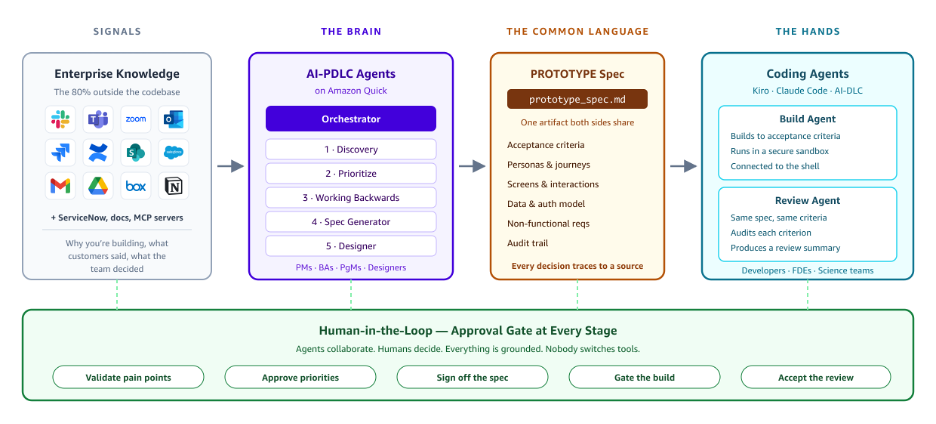
Figure 1: End-to-end AI-PDLC flow, from scattered enterprise signals through AWS Quick agents to the coding-agent handoff
It starts with the signals most teams lose track of, that is, the Slack threads, Jira tickets, docs, and call transcripts that hold the why behind a decision and what customers actually said. Enterprise connectors pull that context from Slack, Outlook, Jira, Salesforce, SharePoint, ServiceNow, and many more enterprise sources.
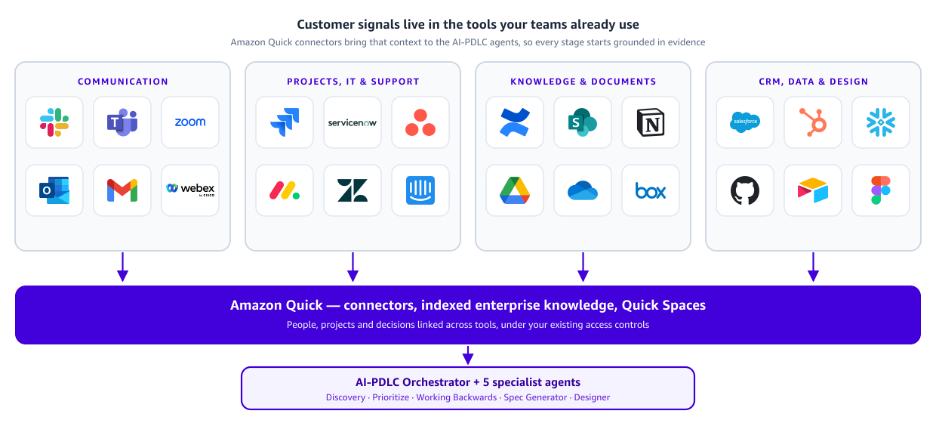
Figure 2: AWS Quick builds a personal knowledge graph that links people, projects, and decisions across connected apps and folders
AWS Quick can build a personal knowledge graph from your connected apps and folders, linking the people, projects, and decisions across your tools.
Those signals feed the brain: the set of agents on AWS Quick, led by an Orchestrator that runs Discovery, Prioritize, Working Backwards, Spec Generator, and Designer. Everything they produce lands in one common language: a prototype_spec.md holding the acceptance criteria, personas, screens, data model. Every decision traces back to a source.
AWS Quick can delegate development tasks to AI coding agents using the Agent Client Protocol (ACP). ACP is an open JSON-RPC 2.0 standard with no vendor lock-in. Customers can use their preferred coding agent like Kiro or Claude Code to build against the specification generated by AI-PDLC.
Underneath it all runs a human approval gate at every stage. You validate the pain points, approve priorities, sign off the spec, gate the build, and accept the review. Production data then flows back into Discovery, closing the loop. The agents do the work while you make the calls, and nobody has to leave their tool to do it.
Solution overview
The AI-PDLC lifecycle spans eight phases: Discover, Decide, Design, Prototype, Engineer, Ship, Operate, and Learn. This post focuses on the first four, where the product team works. The last four are handled by coding agents such as Kiro, which build from the specifications the upstream phases produce. The upstream phases are implemented as six agents in AWS Quick.
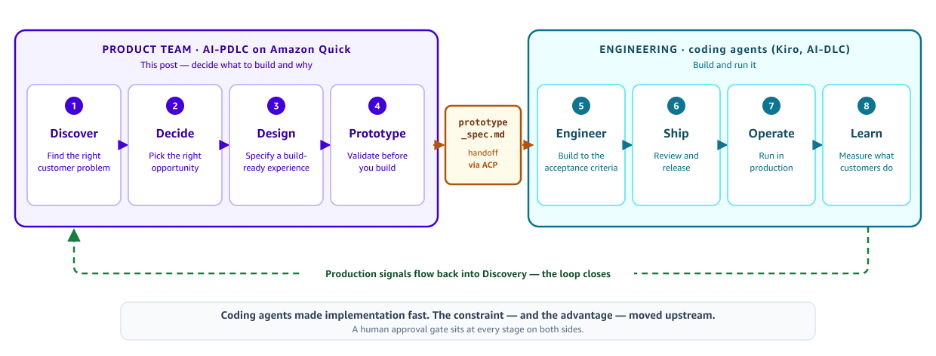
Figure 3: The upstream AI-PDLC phases implemented as six agents in AWS Quick
Users interact only with an Orchestrator, which reads each specialist’s question framework at runtime, asks targeted questions for the current phase, and dispatches artifact generation to the right specialist. A single conversation drives the whole journey, and the pipeline advances only after human approval at each step in the workflow.
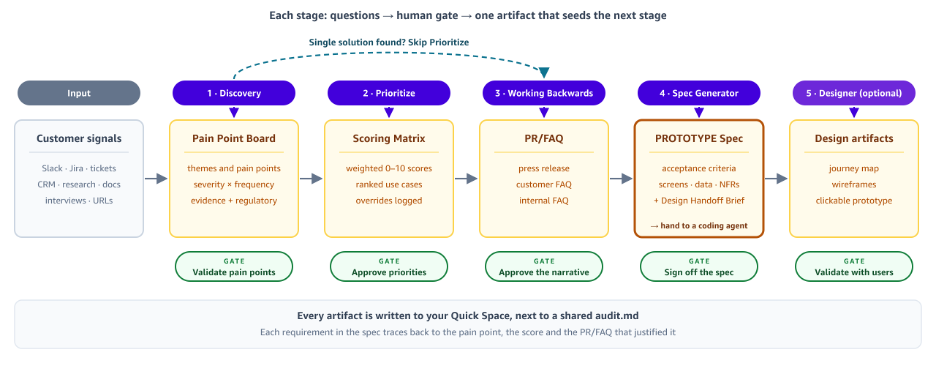
Figure 4: A single Orchestrator conversation drives the pipeline, advancing only after human approval at each gate
Phase 1: Discover
The Discovery agent guides structured pain point analysis across interactive Q&A, URL ingestion, and direct pulls from connected enterprise sources like Slack, Jira, support tickets, Salesforce, and research repositories. It scores every pain point for severity and frequency, producing a Pain Point Board that gives the team one evidence-grounded view of what customers struggle with.
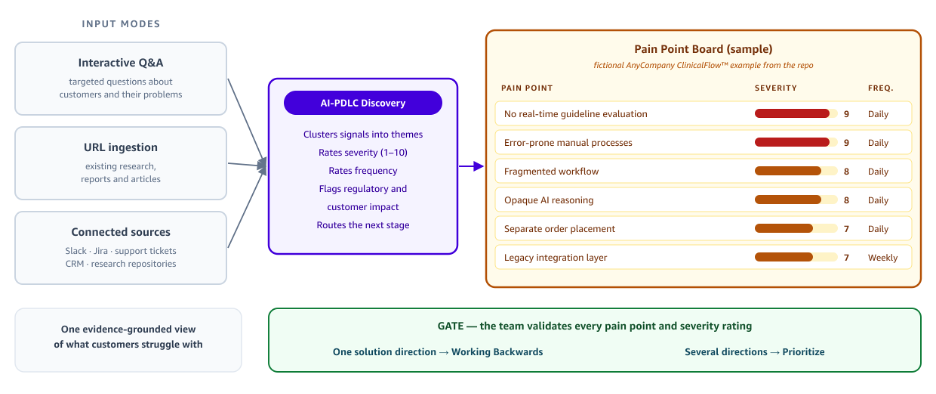
Figure 5: The Discovery agent produces a Pain Point Board scored by severity and frequency
Phase 2: Decide
The Prioritize agent scores each use case against weighted criteria using two transparent 0–10 frameworks: one purpose-built for agentic use cases (large language model (LLM) capability match, tool availability, user acceptance) and one for traditional applications (feasibility, business impact, effort). The team can open the Scoring Matrix and trace exactly why one use case outranks another.
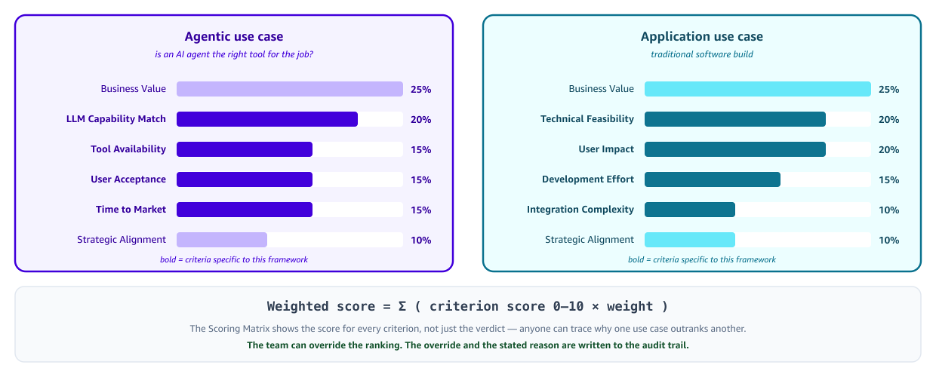
Figure 6: The Prioritize agent Scoring Matrix shows why one use case outranks another
Once the top use case is selected, the Working Backwards agent generates a full PR/FAQ using the Amazon Working Backwards method with customer FAQs and internal FAQs covering unit economics, failure modes, regulatory risk, and competitive landscape. If a concept can’t survive this scrutiny, the team learns that on paper before committing engineering resources.
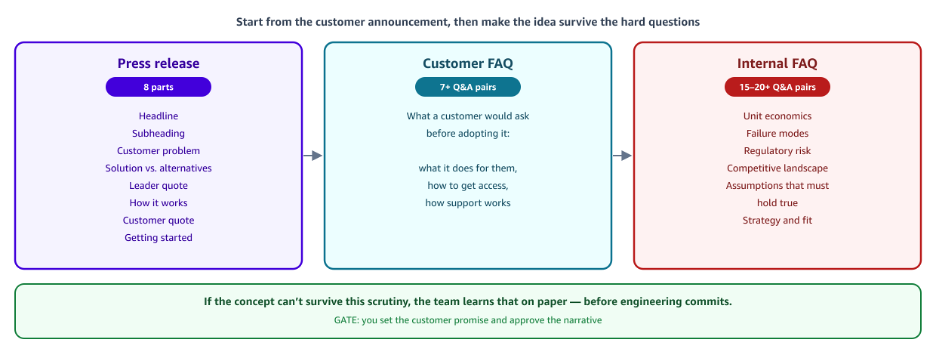
Figure 7: The Working Backwards agent generates a full PR/FAQ for the top use case
Phase 3: Design
The Spec Generator agent turns the validated use case and PR/FAQ into a build-ready specification, with separate templates for agentic versus application use cases plus a Design Handoff Brief for UX teams. Each spec contains acceptance criteria, user flow, constraints, and metadata that traces every requirement back to its source pain point, prioritization score, and the PR/FAQ that validated it. Those acceptance criteria serve a dual purpose: they’re the build contract the coding agent follows, and the review rubric the review agent audits against. What used to take multiple sprints of drafting and review becomes a focused session, detailed enough for engineering to build from design spec immediately, with few or no clarifying meetings required.
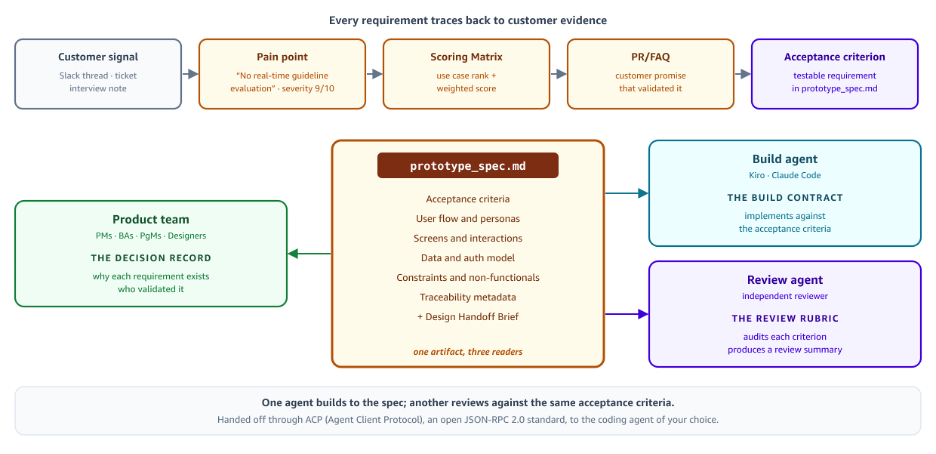
Figure 8: The Spec Generator agent turns the validated use case into a build-ready specification
Phase 4: Prototype
The Designer agent generates journey maps, wireframes, and clickable HTML prototypes directly inside AWS Quick. It works from the Design Handoff Brief, personas from Discovery, user flow from the PR/FAQ, screens to design, brand context, and the emotional target drawn from the customer quote, so teams can validate concepts with stakeholders before committing to Figma or other design tooling. After the spec is approved, it’s dispatched to the engineering team for development.
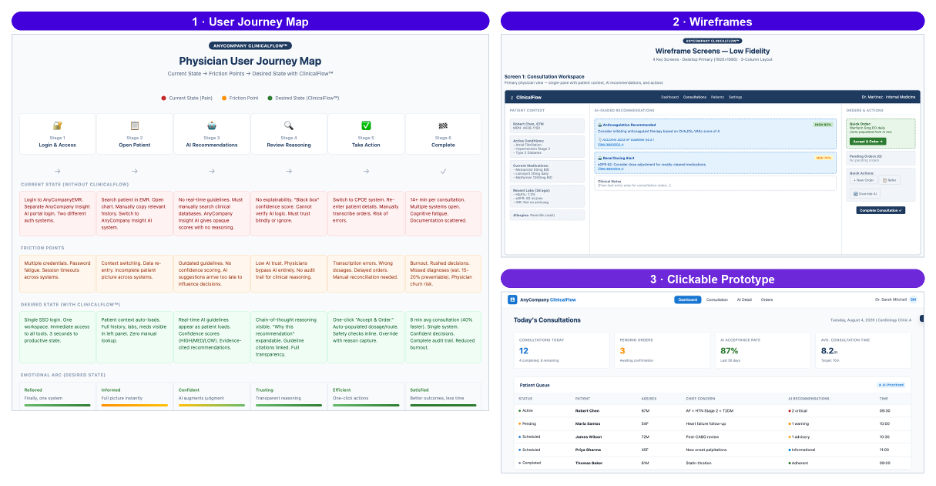
Figure 9: The Designer agent generates journey maps, wireframes, and clickable prototypes inside AWS Quick
The entire loop is iterative, with humans reviewing and approving at every gate. Nothing ships without explicit signoff. What traditionally takes multiple weeks of prototyping and iteration could become days or even just hours of guided agent collaboration depending on the complexity of the problems.
Every decision is logged at two levels. Each specialist records its own decisions, scores, and rationale inside the artifact it produces, and the Orchestrator independently checks that those entries exist while keeping a shared log across the whole pipeline. If one layer slips, the other still holds a complete record, so no gate approval goes untracked.
AI-PDLC can be executed across two pacing modes. Deep Discovery asks 8–12 questions per phase, chasing ambiguities and edge cases. It fits a new problem space where the team wants thorough exploration. Fast Track trims each phase to 3–5 essential questions and suggests defaults from context it already holds, letting you confirm or override each one. It fits time-boxed sessions where the team knows the space and needs to move quickly.
Agent implementation details: Step by step
We will walk through the details of the agent creation and implementation process.
Prerequisites
- An AWS Quick workspace with the Desktop client installed.
- Access to create custom agents in AWS Quick with Enterprise connectors configured for Slack, Jira, SharePoint, or other tools your team uses.
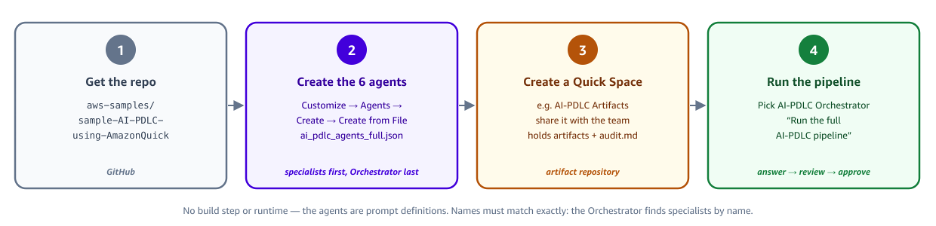
Figure 10: An AWS Quick workspace with enterprise connectors configured
Step 1: Clone the AI-PDLC repository
The full agent suite, reference architecture, prompt templates, and setup instructions are available in the AI-PDLC GitHub repository.
The repository contains:
- Agent instruction files for all six agents.
- Question framework samples for each specialist agent.
- Configuration files and setup guide.
Step 2: Create the specialist agents
In AWS Quick, create the specialist agents using the instructions from the repository:
Step 2.1: Download the JSON file from the GitHub repository for agent building.
Step 2.2: Go to Quick Desktop → Customize → Agents → Create, then choose Create from File.
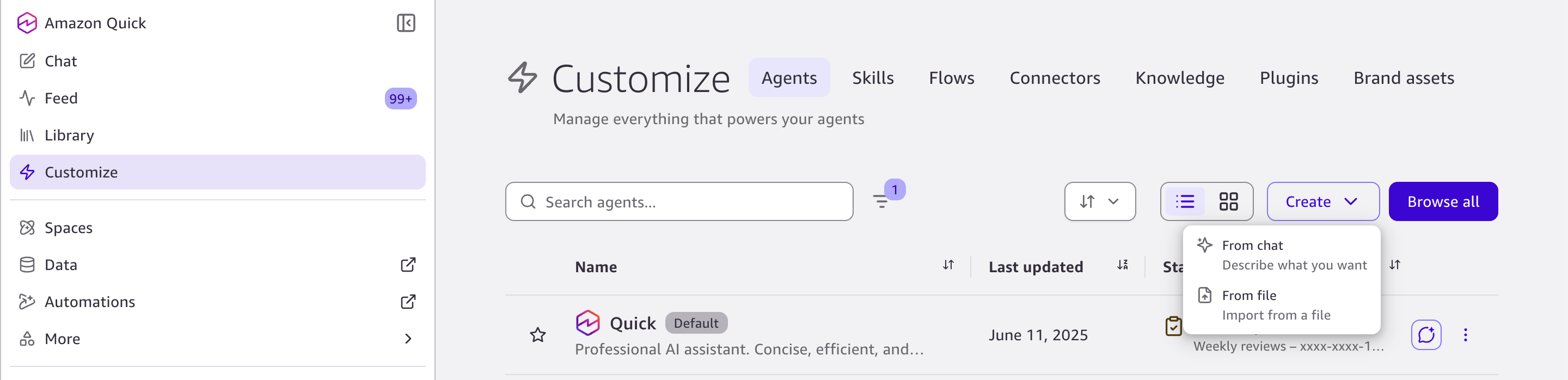
Figure 11: Creating the specialist agents in Quick Desktop with Create from File
Step 2.3: The chat window opens up.
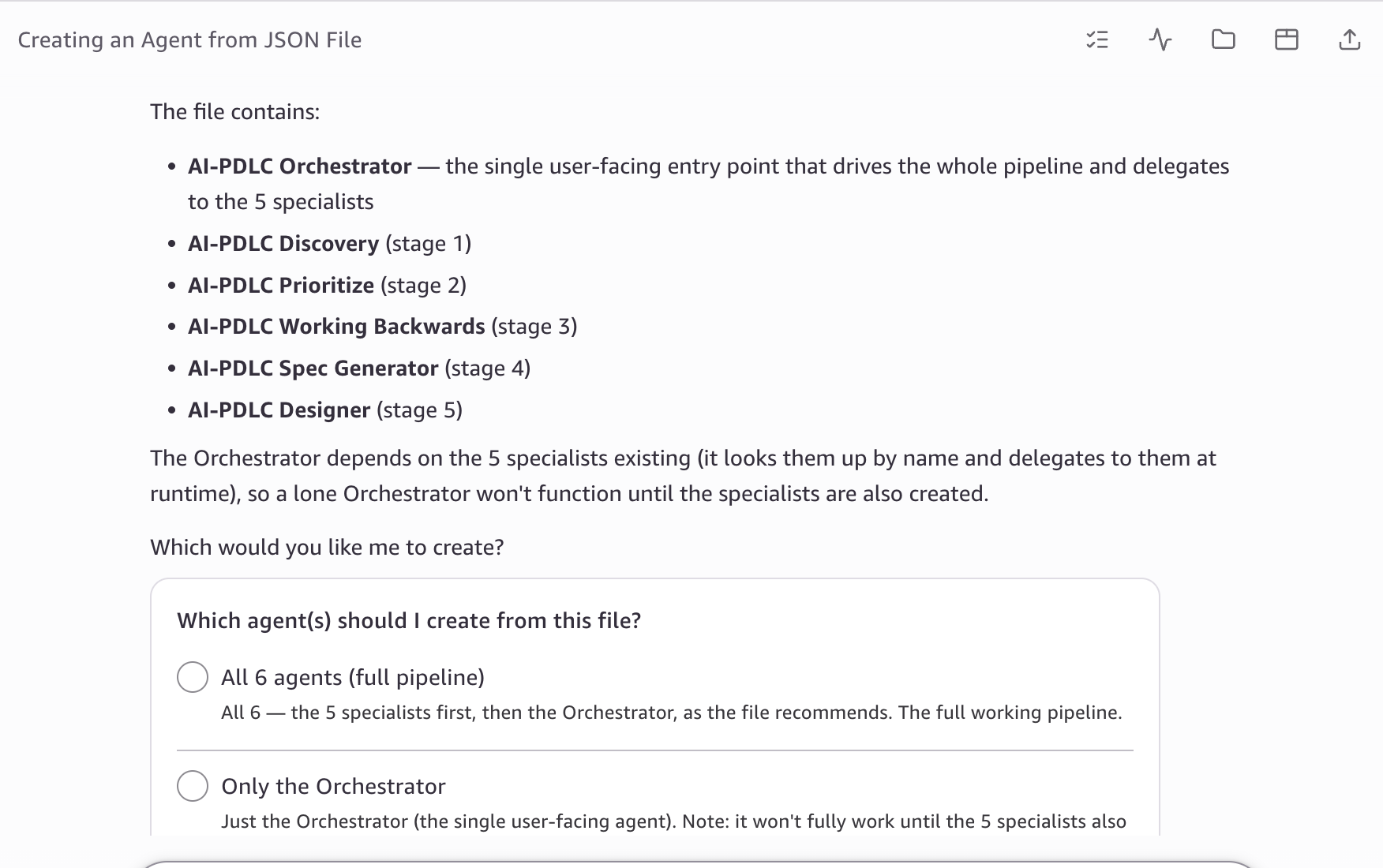
Figure 12: The chat window that opens during agent creation
Step 2.4: The following six agents with instructions are created:
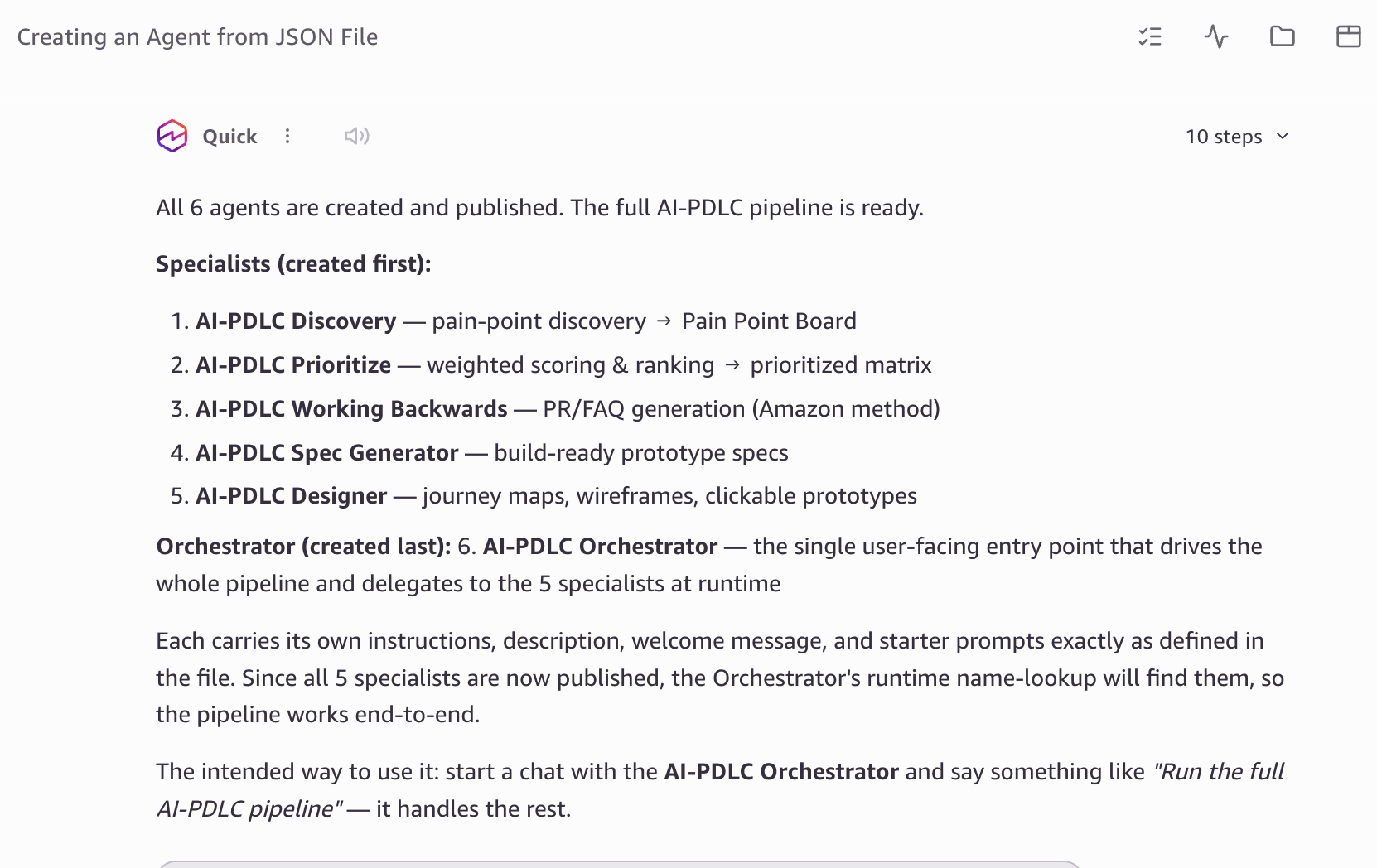
Figure 13: The six AI-PDLC agents created with their instructions
The Orchestrator is the central architectural component. It dynamically reads each specialist’s instructions at runtime:
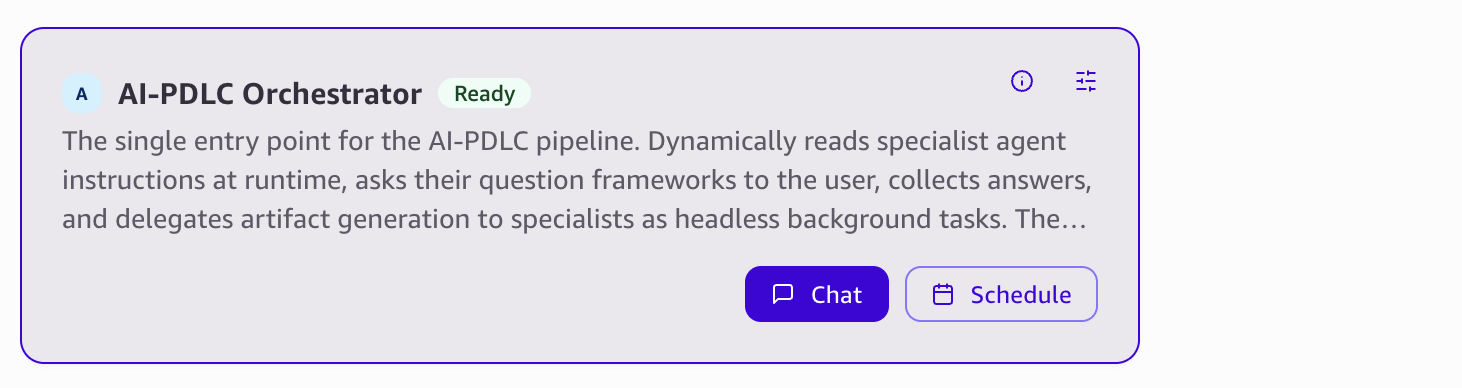
Figure 14: The Orchestrator dynamically reads each specialist’s instructions at runtime
Step 3: Configure Quick Spaces (artifact repository)
Create a shared Quick Space for storing pipeline artifacts:
- Open Quick Spaces and select Create New Space.
- Name: AI-PDLC Artifacts.
- Grant access to relevant team members.
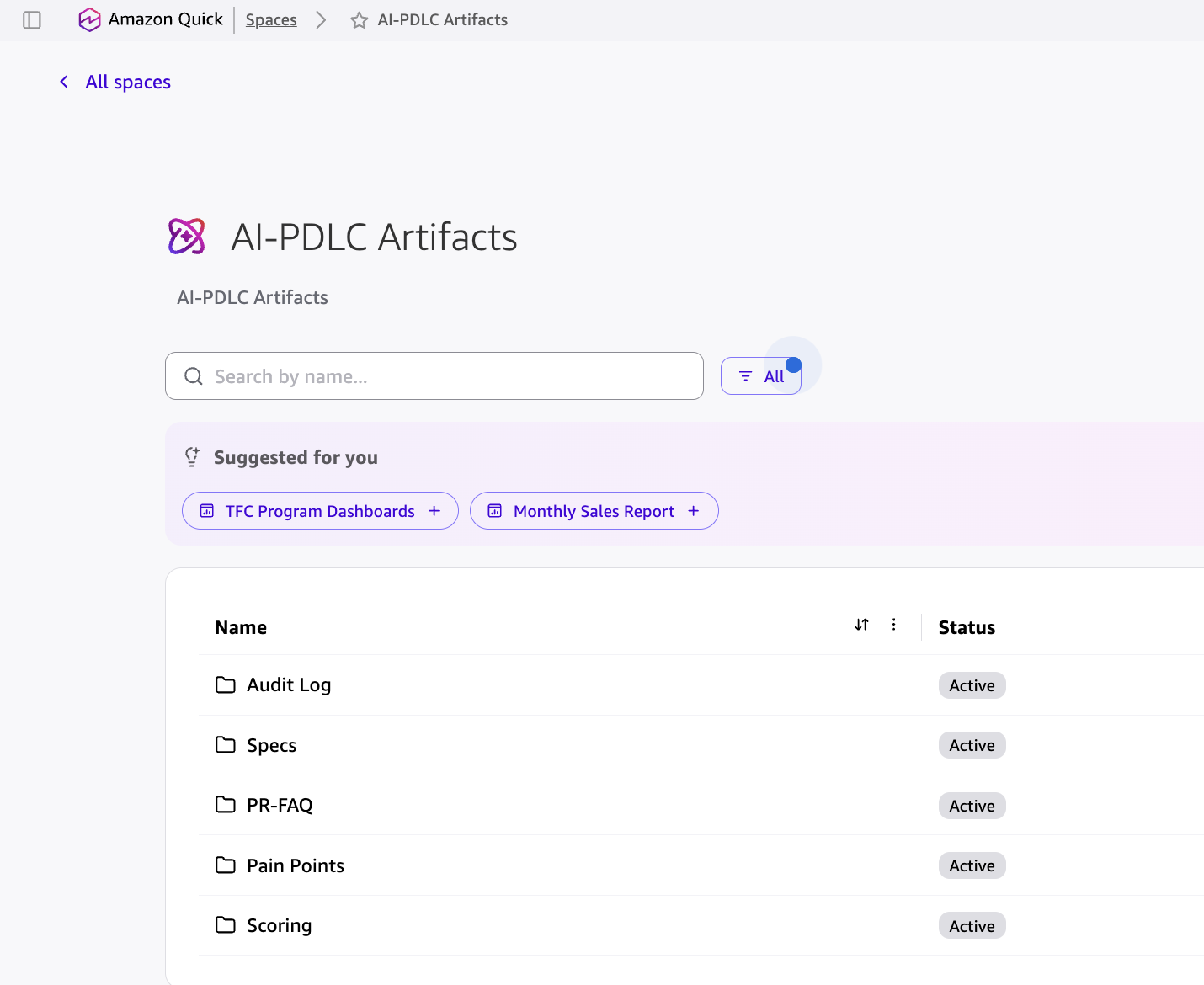
Figure 15: Creating the AI-PDLC Artifacts Space and granting access to team members
Step 4: Run the pipeline
- Open AWS Quick Desktop.
- Select AI-PDLC Orchestrator from the agent picker.
- Enter: “Run the full pipeline” (or “Fast Track” for an abbreviated session).
- Answer the Orchestrator’s structured questions as it guides you through each phase.
- Review artifacts as they are produced at each gate.